Nos numéros
Toutes les éditions
Google launched Playground today, and the prompt box is the least interesting part. We see the same systems problem in OpenAI’s 722 math manuscripts: generation can outrun the systems that decide what deserves attention.
★ Analyse
Google’s game generator is a distribution test

Google opened Playground today to US users aged 18 or over, while Switzerland has no access; prompt-built games can stay private or be shared through links and a public gallery. The prompt box is bait. Behind it, Google controls login, sharing, discovery and ratings, while Google One membership sets creation limits; Unity Spark is meant to add richer 3D and professional game systems later in 2026. Google calls Playground an early experiment; it publishes no quality or delay figures and gives no API, export format, cost model or commercial terms, while Spark still awaits a closed beta. Our pilot gate would be simple: assets and usage data must leave cleanly, or the work stays in the experiment budget.
Lire la source →Perspective CTO
“Google’s Playground makes my architecture choice easy: I assume the generator will be copied. I design around the control points that survive copying: login, review, discovery and distribution.”
★ 3 actualités

Healthleap raises $38M to flag patients for review
Healthleap disclosed an $8 million seed round and a $30 million Series A for AI that flags hospital patients who may need a closer look. That changes who gets seen. Missed patients and alert overload are the deployment risks because a flag can redirect clinical attention before any diagnosis is made.
Lire →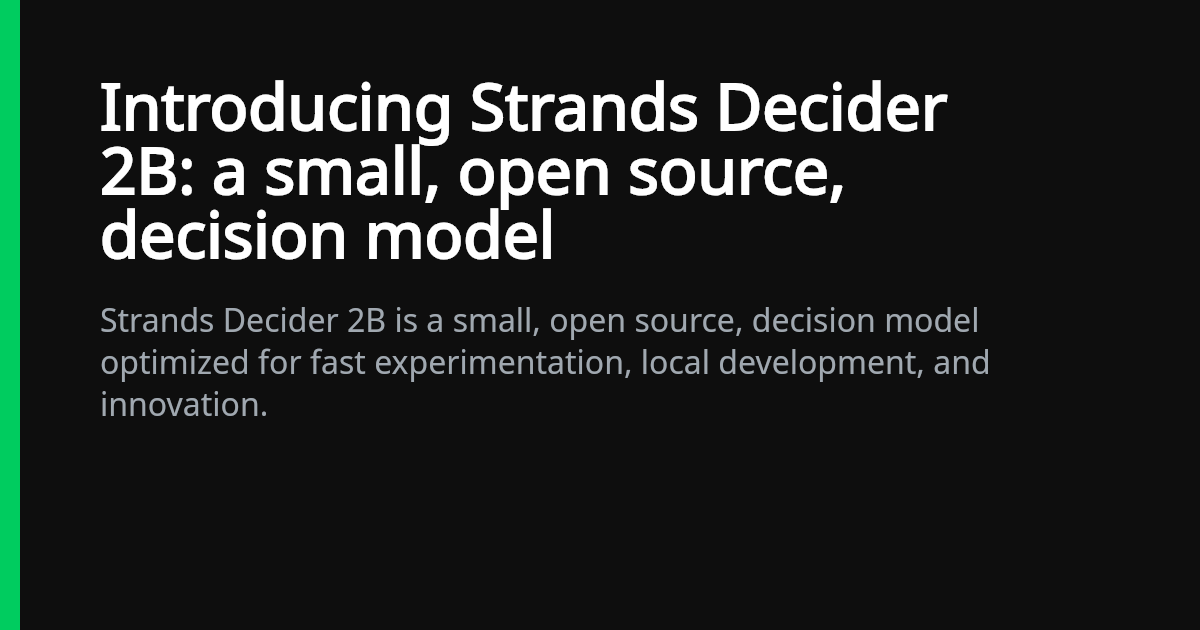
Strands releases a 2B decision model
Strands released Decider 2B today, a small open-source model built to choose among actions inside software workflows. Two billion parameters are the point. At that size, it gives us a compact candidate for routing requests or ranking an agent’s possible next actions, jobs where a general chat model can add needless cost and delay.
Lire →
Chrome ships JPEG XL
Google’s browser just reopened an image-pipeline decision. JPEG XL support is shipping in Chrome, so web teams can test the format there. Your own images and delivery costs can now decide whether it earns a production path.
Lire →★ Aperçu du secteur
- →OPENAI API: OpenAI put its Decisions API into public beta on 7 October, opening the service to public testing. →
- →AUTONOMOUS RAIL: SpaceX alumni at Parallel Systems raised $100 million to scale autonomous electric rail vehicles that can carry thousands of pounds for up to 500 miles. →
- →AI DEVICES: Tony Fadell argues that first-wave AI gadgets failed to solve concrete problems and that the next wave must earn consumer trust. →
- →SOFTWARE RIGHTS: Photopea’s developer says GitHub left AI-assisted cracked copies of the browser editor online after a month of removal requests. →
★ Pendant ce temps en Suisse

Some chatbot vendors share entire conversations
Netzwoche reports that some AI chatbot operators pass full chat transcripts to third parties. More companies then hold the text. For us in Switzerland, each extra copy adds another retention rule and another place the conversation can leak.
Lire →
AI agents gain ground in Swiss customer service
According to Netzwoche, AI agents are gaining ground in Swiss customer service; these systems can take actions within a case. Refunds expose the boundary. An automated account change can become a costly customer error when escalation fails.
Lire →
ADN adds Swissbit security keys to its catalogue
ADN now carries Swissbit’s hardware login keys. For us, that adds another channel for buying devices and replacements through approved suppliers.
Lire →★ L'académie IA
The review bottleneck behind OpenAI’s 722 math manuscripts
OpenAI published 722 AI-produced mathematical manuscripts this week. The release exposes a new bottleneck: candidate proofs can arrive far faster than experts can judge which claims are sound and worth attention.
- OpenAI gave an unreleased internal model about 4,000 open problems. Most retained results followed one common procedure and used, on average, the equivalent of roughly three hours of ChatGPT Pro thinking time per result.
- The counts differ. The release contains 722 manuscripts across 372 result families. One family can bundle a main theorem with several related or alternate proofs, which is why the manuscript total is larger.
- In Lean, a proof is written as machine-checkable steps against stated definitions and starting rules. Fluent prose earns no credit there: one invalid formal step breaks the chain.
- Lean’s boundary matters here. It checks the proof chain that was encoded, while humans still judge whether the assumptions capture the intended problem and whether the result matters.
- Only some manuscripts have Lean proofs, and OpenAI says the collection spans different verification stages. The internal model remains unreleased. Its processing number is an estimate, and independent review has yet to match the production rate.
- The CTO lesson for us is capacity planning: more agent output needs matching review capacity. OpenAI’s version and correction process offers a useful pattern: every generated item keeps its check status and correction history.
★ Outil de la semaine
EmbeddingGemma 2A lightweight open model for one search index across text and images.
DeepMind released EmbeddingGemma 2 this week, an open, lightweight model that turns words and images into comparable number patterns. One query can retrieve either. For product catalogues or technical manuals, that keeps search separate from whichever model writes the answer.
Explorer →Hors série
Les éditions spéciales
Toutes les quelques semaines, une édition plus longue le dimanche, centrée sur un seul thème.
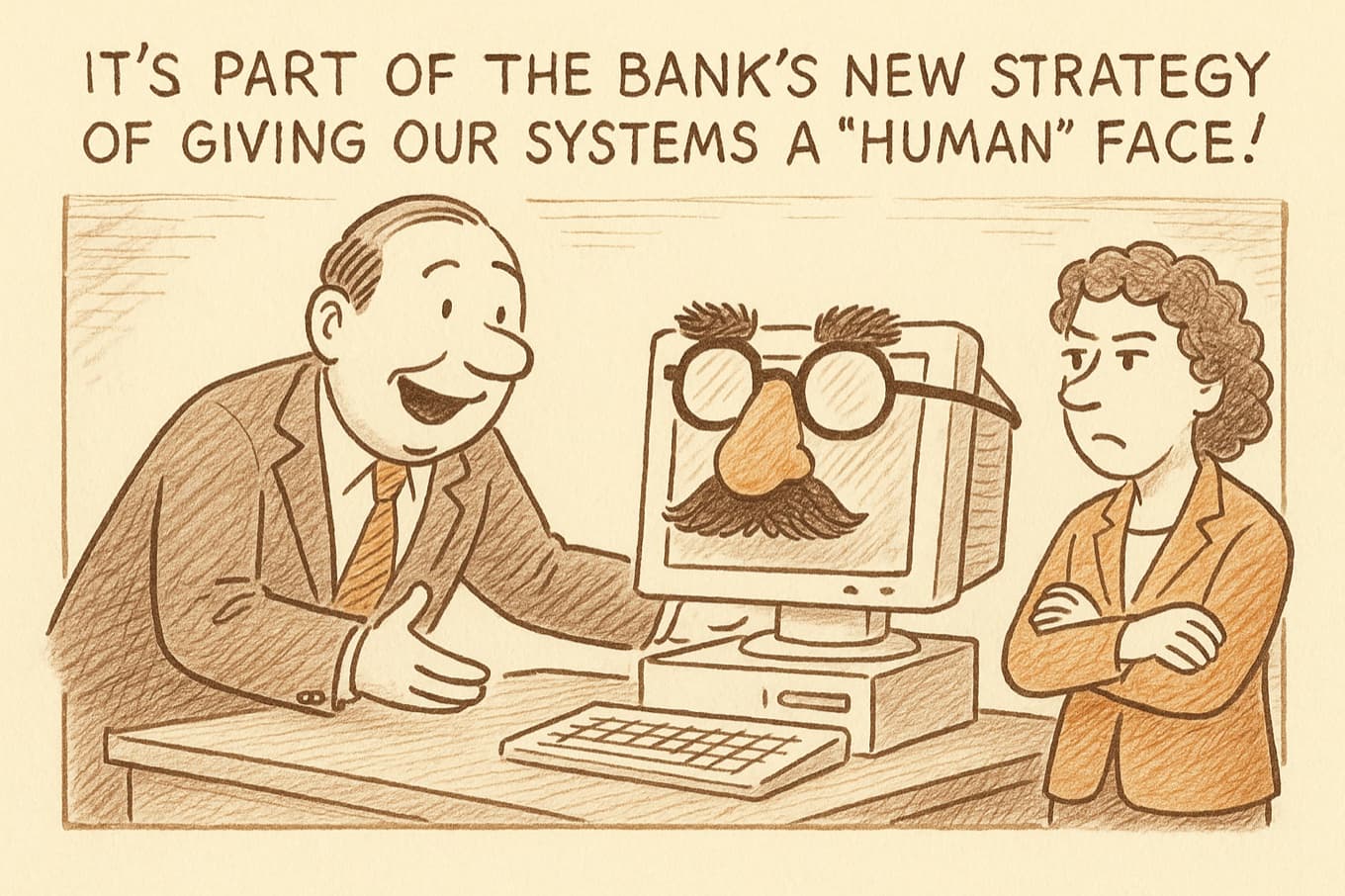
Quand la banque se met à faire le travail
IA agentique dans la banque : qui déploie vraiment, qui reste bloqué au pilote, et où se situe la Suisse — dans le sillage de notre panel à Genève.
Lire l'édition →
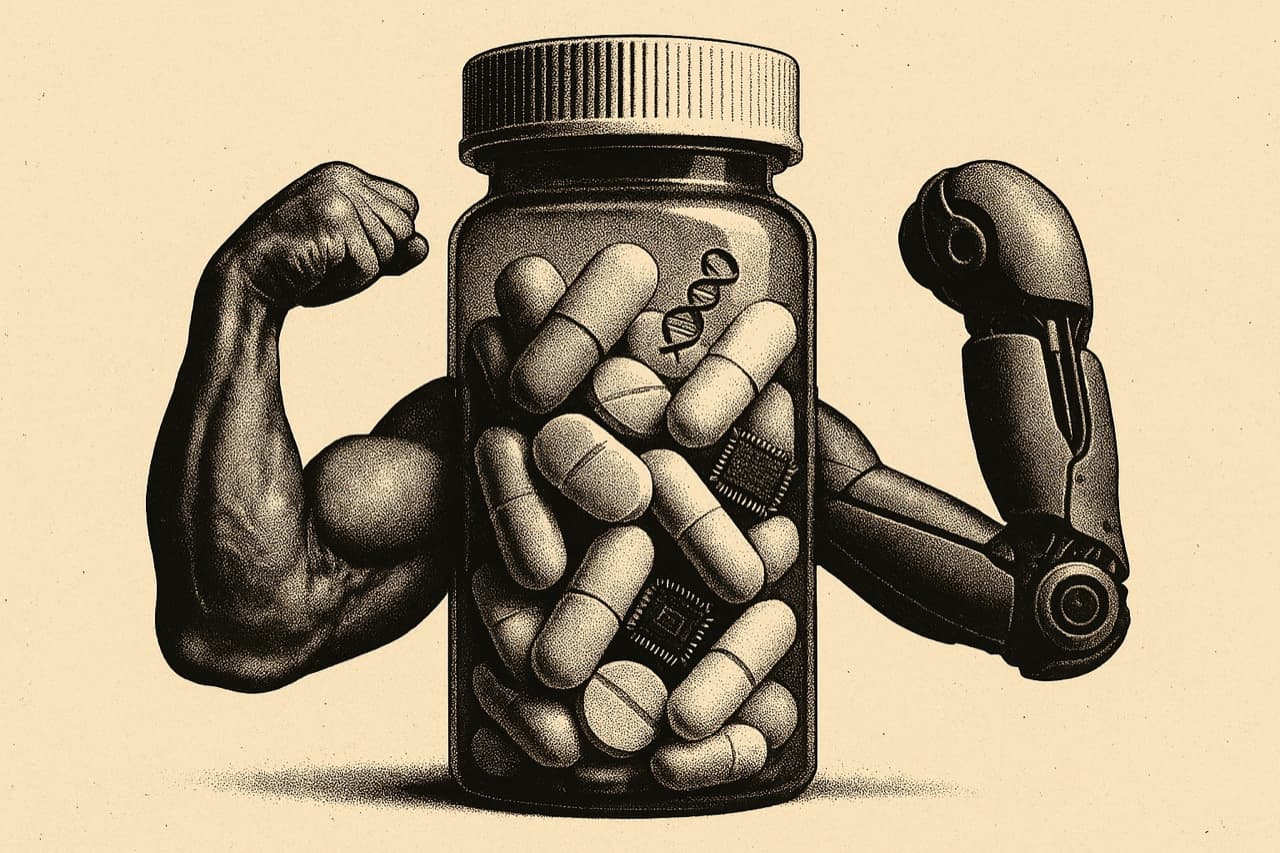
Une olympiade dopée à Vegas, des cerveaux qui marchent à Lausanne, et l’IA qui dessine des médicaments
Santé et longévité : les Enhanced Games, le pont cerveau-moelle d’Onward à Lausanne, et la boucle IA qui transforme la découverte de médicaments.
Lire l'édition →
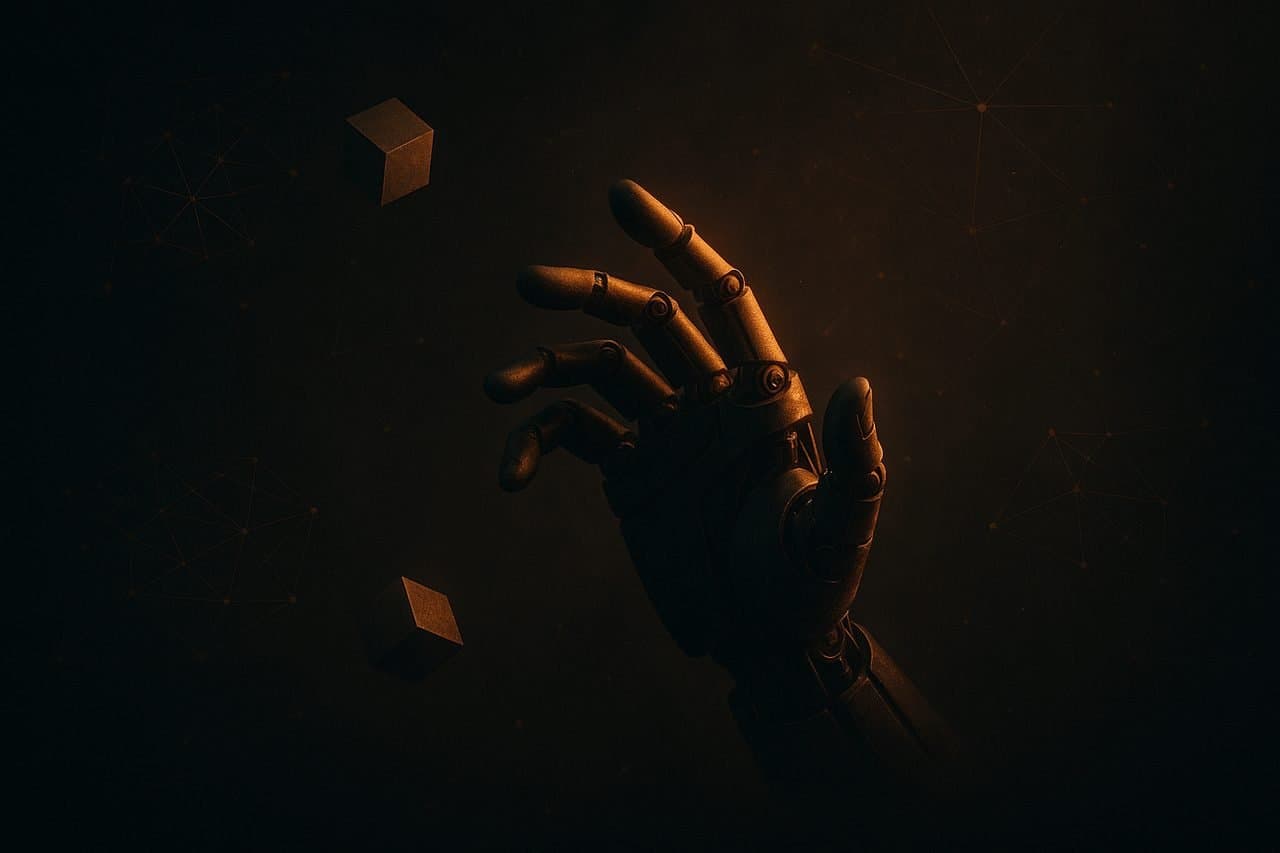
Mains, semi-marathons, et un robot qui chasse des sangliers
Robotique : la main humanoïde de Genesis AI, les démos sport robots-vs-humains, et l'écosystème robotique suisse.
Lire l'édition →
Rejoignez les lecteurs